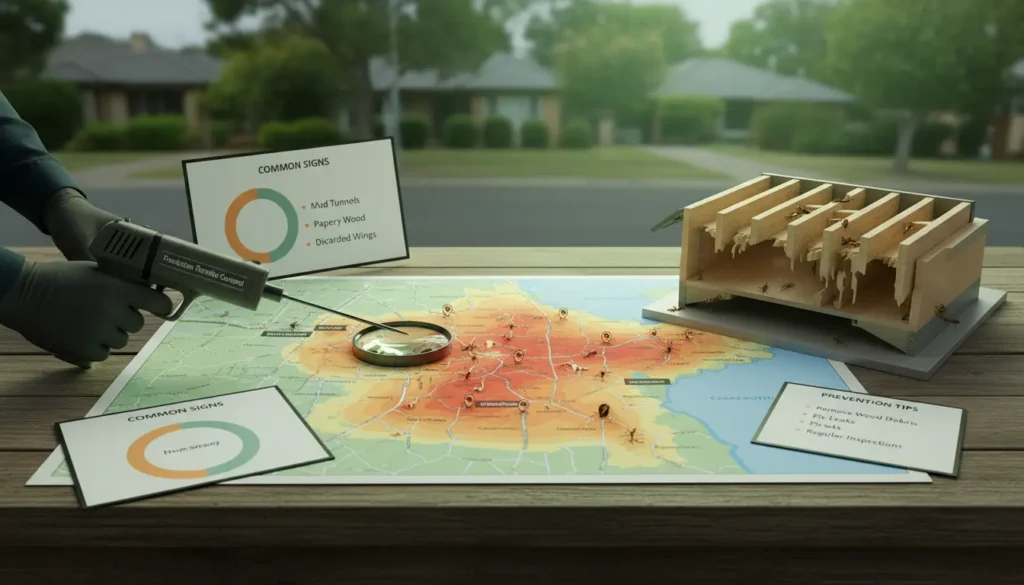
Termites can silently destroy homes and businesses across Frankston, causing thousands in damage before they’re even noticed. As a homeowner or property owner in this bustling Melbourne suburb, you might not realise that certain areas are prime targets for these wood-munching pests. At Frankston Termite Control, we’ve inspected countless properties over the years and seen firsthand how local conditions make some spots more vulnerable than others. In this post, we’ll uncover the top termite hotspots in Frankston and nearby suburbs like Seaford, Carrum Downs, and Langwarrin. You’ll learn what makes these areas risky, how to spot early signs, and practical steps to safeguard your investment. Don’t let termites turn your dream home into a nightmare—knowledge is your first line of defence.
Understanding Termite Hotspots in Frankston and Surrounding Areas
Termites thrive in warm, humid environments, and Frankston’s coastal climate provides the perfect breeding ground. These subterranean and drywood pests feed on cellulose in wood, quietly compromising structural integrity. But why are certain suburbs in the Frankston area more prone to infestations? It boils down to soil type, vegetation, and human activity. Sandy soils common in coastal regions like Frankston retain moisture, attracting moisture-seeking termites. Nearby bushland and eucalypt forests offer abundant food sources, while urban development can inadvertently create entry points.
In our experience at Frankston Termite Control, we’ve noted that termite activity peaks during warmer months, with colonies expanding rapidly after rain. Subterranean termites, the most destructive in Victoria, tunnel underground to reach buildings, often entering through cracks in foundations or via mulch beds. Drywood termites, less common but still a threat, infest furniture and timber without needing soil contact.
To help you identify risks, here’s a breakdown of key hotspots:
- Frankston Central and Karingal: High-density housing near parks and gardens increases moisture levels. We’ve found termites nesting under concrete slabs here, drawn by leaking pipes and poor drainage.
- Seaford and Seaford Meadows: Proximity to wetlands and the coast means damp soils ideal for mound-building termites. Properties backing onto reserves often show mud tubes along exterior walls.
- Carrum Downs: Expansive green spaces and older homes with timber frames are hotspots. Termite swarms are common in spring, signalling nearby colonies.
- Langwarrin and Sandhurst: Rural-urban fringes with native vegetation harbour arboreal termites in trees, which can bridge to homes via branches.
- Baxter and Pearcedale: Semi-rural areas with unsealed roads and timber sheds see higher infestations due to untreated wood piles.
Understanding these patterns is crucial because early detection can save you from costly repairs. For instance, termites can consume up to 15kg of wood per year per colony. If you’re in one of these areas, consider scheduling a professional termite inspection to assess your risk. Local regulations in Victoria require termite management plans for new builds, but many older homes in Frankston overlook ongoing checks.
By mapping these hotspots, we’re empowering you to act proactively. Remember, termites don’t respect property boundaries—infestations can spread from neighbouring lots. Stay vigilant, especially if your home has been built on reclaimed land common in coastal suburbs.
Practical Tips to Protect Your Property from Termite Hotspots
Preventing termite damage in Frankston starts with understanding local factors. The area’s subtropical climate, with frequent summer rains and mild winters, keeps soil consistently moist, accelerating termite activity. Combine this with the prevalence of weatherboard and brick veneer homes, and you’ve got a recipe for vulnerability. Victorian building codes mandate termite barriers in new constructions, but retrofitting older properties requires targeted strategies.
Here are actionable steps tailored to Frankston and nearby suburbs:
-
Inspect Regularly: Schedule annual checks, focusing on hotspots like subfloor areas and eaves. Look for mud tubes, frass (termite droppings), or hollow-sounding timber. In humid Seaford, pay extra attention to retaining walls.
-
Reduce Moisture: Fix leaks promptly and ensure good drainage around your foundation. In Frankston’s sandy soils, install ag pipes to divert water away from slabs. Mulch gardens sparingly—opt for inorganic alternatives to avoid creating termite highways.
-
Create Barriers: Apply physical barriers like stainless steel mesh under slabs during renovations. For existing homes, chemical treatments around perimeters can deter subterranean termites. Choose licensed applicators compliant with Australian standards.
-
Manage Vegetation: Trim trees and shrubs away from your house to prevent bridging. In Langwarrin, where native gums are common, remove dead wood promptly to eliminate food sources.
- Monitor with Baits: Use in-ground bait stations in high-risk yards. These systems, monitored by professionals, target colonies before they reach your home.
Local housing types amplify these needs—many Frankston homes feature raised floors ideal for termite access. Weather patterns, like El Niño-driven dry spells followed by downpours, can flush termites towards structures seeking water.
Pro Tip: An insider secret from our team: In coastal suburbs like Carrum Downs, check for termites in boat sheds or outdoor entertaining areas. Salt air accelerates wood decay, making these spots prime entry points. Treat them with borate-based sprays for long-term protection—it’s a simple step that could prevent a major infestation.
For comprehensive defence, integrate these tips with advanced termite treatment options. If you’re building or renovating, consult local council guidelines on termite-resistant materials. These measures not only protect your property but also boost its value in the competitive Frankston real estate market.
Common Mistakes to Avoid in Termite-Prone Areas
Homeowners in Frankston often underestimate termite risks, leading to devastating consequences. One frequent error is ignoring routine inspections, assuming coastal breezes keep pests at bay. In reality, this complacency allows colonies to establish undetected, resulting in structural damage costing $5,000 to $20,000+ in repairs.
Another pitfall is DIY treatments without professional guidance. Over-the-counter baits might seem cost-effective, but they’re ineffective against large subterranean colonies common in Seaford. Improper application can even spread termites further, exacerbating the problem and voiding insurance claims.
Storing firewood or mulch against the house is a classic mistake. In moist Langwarrin soils, this creates direct pathways for termites. We’ve seen cases where untreated pine stacks led to full-home infestations, compromising safety by weakening beams and floors.
Neglecting subfloor ventilation is rife in older Frankston homes. Poor airflow traps humidity, inviting drywood termites that chew through joists. The financial hit includes not just repairs but potential health risks from mould growth in infested areas.
Finally, overlooking neighbouring properties is shortsighted. Termites travel, so an untreated yard next door can invade yours. This interconnected risk in suburban settings like Baxter amplifies damage potential, often leading to disputes and higher collective costs.
Avoid these by partnering with experts for termite barrier installations. The risks—financial loss, safety hazards, and devalued property—are too high to ignore in our termite hotspots.
Wrapping Up: Safeguard Your Frankston Home Today
Termites pose a real threat in Frankston and nearby suburbs, with hotspots like Seaford, Carrum Downs, and Langwarrin demanding proactive measures. By recognising risks, implementing practical tips, and steering clear of common errors, you can protect your property effectively. Key takeaways include regular inspections, moisture control, and professional barriers tailored to our local climate.
At Frankston Termite Control, we’ve helped hundreds of locals fortify their homes against these silent destroyers. If you’d rather leave it to the pros, our team offers thorough termite detection services and reliable treatments with fair pricing. For peace of mind, book a free termite risk assessment today.
Need help with top termite hotspots in Frankston and nearby suburbs? Call Frankston Termite Control today at 0390221295.
Leave a Reply