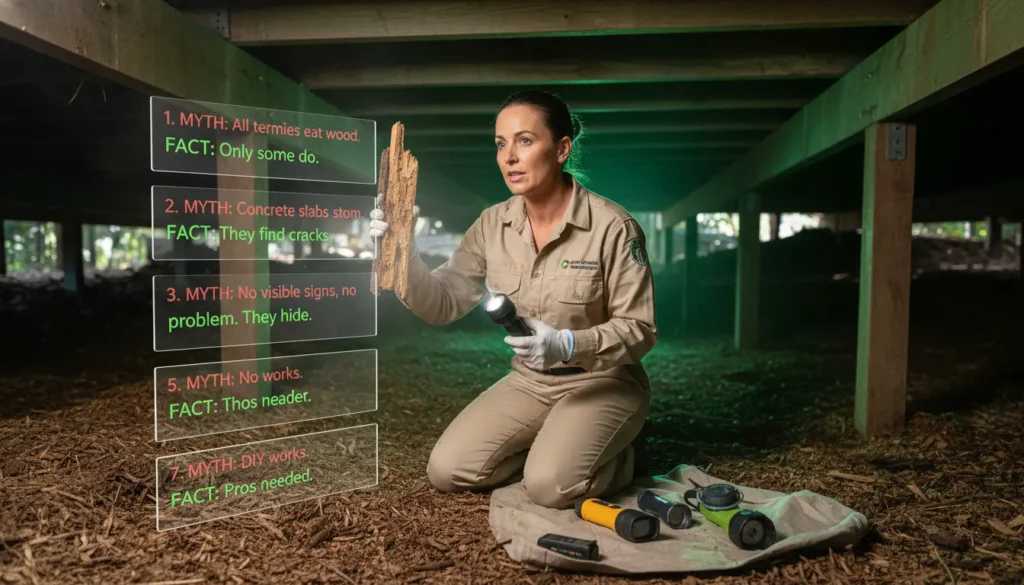
Termites are a silent threat lurking in many Australian homes, causing billions in damage each year without a single warning sign. As a homeowner in Frankston or the surrounding Melbourne suburbs, you might think you’ve got it all under control, but misconceptions can leave your property vulnerable. At Frankston Termite Control, we’ve inspected countless homes in our local area and seen firsthand how myths lead to overlooked infestations. In this post, we’ll debunk seven widespread termite myths, arming you with the knowledge to protect your investment. Whether you’re in a weatherboard house or a modern brick build, understanding these truths can save you from structural headaches down the track.
Debunking the Top 7 Termite Myths: What You Need to Know
Termites, often called white ants in Australia, are subterranean pests that thrive in our warm, humid climate. But myths persist, spreading misinformation that can delay critical action. Why does this matter? Because untreated termite damage can weaken foundations, compromise safety, and slash your home’s value—issues we’ve encountered frequently during termite inspections in Frankston. Let’s break down the facts in simple terms: termites don’t just munch on wood; they tunnel through soil, mud, and even concrete barriers, creating hidden networks that evade the naked eye.
Here are the seven most common myths, busted with evidence-based insights:
-
Myth 1: Termites only attack wooden houses. Reality: While they prefer cellulose in timber, termites in Victoria can infest brick, concrete, and even insulation materials. In Frankston’s coastal conditions, we’ve seen them breach modern homes via expansion joints.
-
Myth 2: You can spot termites easily by looking for mud tubes. Reality: These tubes are just one sign, and early infestations often show no visible clues. Subterranean termites, common here, work underground—requiring professional tools like thermal imaging for detection.
-
Myth 3: Termites only live in older homes. Reality: New builds are equally at risk, especially with untreated pine frames. Regulations in Victoria mandate termite management, but lapses happen. Our team has treated brand-new properties in the Frankston area.
-
Myth 4: DIY treatments are as effective as professional ones. Reality: Over-the-counter baits and sprays rarely reach colonies deep underground. They can even scatter termites, worsening the spread. For reliable results, opt for licensed pest control solutions.
-
Myth 5: Termites don’t fly or swarm. Reality: Alates (winged termites) do swarm during warm, humid evenings, especially post-rain in Melbourne’s variable weather. Spotting wings near lights? It’s a red flag for nearby colonies.
-
Myth 6: Cold winters kill off termites. Reality: Victoria’s mild climate allows termites to survive year-round in heated soil. Even in Frankston’s cooler months, they remain active below ground, resuming damage in spring.
- Myth 7: Annual inspections aren’t necessary if your home looks fine. Reality: Termites cause hidden havoc; visible damage might appear years later. Australian standards recommend yearly checks, particularly in high-risk zones like ours.
In our experience at Frankston Termite Control, debunking these myths early prevents major claims on insurance—saving homeowners thousands. Moisture from leaky pipes or poor drainage, exacerbated by Frankston’s rainy spells, often invites these pests. Understanding their biology—social colonies with kings, queens, and workers—helps demystify why superficial checks fall short.
Practical Tips to Protect Your Home from Termites
Armed with the facts, how can you apply this knowledge practically? Start by assessing your property’s vulnerabilities, tailored to Frankston’s environment. Our suburb’s proximity to bushland and fluctuating humidity creates ideal termite breeding grounds, so proactive steps are essential. Begin with a visual walkthrough: check for frass (termite droppings) resembling sawdust, or hollow-sounding timber by tapping walls.
Actionable advice includes:
-
Maintain moisture levels: Fix leaking taps and ensure gutters direct water away from foundations. In Melbourne’s wet winters, standing water around slabs invites subterranean termites—use gravel barriers to improve drainage.
-
Seal entry points: Caulk cracks in concrete slabs and install mesh screens on subfloor vents. For elevated homes common in Frankston, inspect piers and stumps regularly.
-
Use treated materials: When renovating, choose termite-resistant timber like treated pine, compliant with Australian standards. Avoid untreated particleboard in wet areas.
- Schedule regular monitoring: Pair visual checks with bait stations around your perimeter. Local regulations in Victoria encourage integrated pest management over chemicals alone.
Considering Frankston’s sandy soils and eucalypt surroundings, termites here favour native timbers, so landscaping matters—keep mulch at least 15cm from walls and opt for inorganic alternatives.
Pro Tip: An insider secret from our inspections: Look for ‘termite mud shelves’ on brickwork during dry spells; they’re a telltale sign of active foraging. If spotted, don’t disturb them—call experts to trace the colony without alerting it.
For hands-on protection, integrate these habits into your routine. If you’re building or buying, insist on a pre-purchase termite inspection to uncover hidden risks before they become your problem.
Common Mistakes to Avoid When Dealing with Termites
Homeowners in Frankston often fall into traps that amplify termite woes, turning minor issues into major repairs. One big error is ignoring subtle signs, like blistering paint or squeaky floors, dismissing them as ‘settling.’ This delay can lead to structural failure, with repair costs soaring into tens of thousands—far outweighing a simple inspection fee.
Another pitfall: Relying on outdated folklore, such as planting ‘termite-repelling’ plants like eucalyptus, which actually attract them in our local ecosystem. Safety risks escalate too; DIY chemicals might harm pets or contaminate soil, breaching environmental regs in Victoria.
Financially, skipping professional advice for bargain baits often fails, allowing colonies to rebound stronger. We’ve seen cases where ignored mud tubes led to foundation erosion, forcing evacuations and insurance disputes. Business owners with commercial properties make similar oversights, underestimating termite impacts on inventory storage.
To sidestep these, prioritise evidence over anecdotes. Delaying action not only risks your wallet but your family’s safety—termites can undermine load-bearing beams without warning.
Wrapping Up: Stay Vigilant Against Termite Threats
Busting these seven myths reveals that termites are a year-round concern for Aussie homeowners, demanding vigilance over complacency. From understanding their hidden habits to implementing moisture controls and regular checks, you’re now equipped to fortify your Frankston home. Remember, early detection through facts—not fiction—preserves your property’s integrity and value.
If navigating this feels overwhelming, Frankston Termite Control is here to lend our expertise. With years serving Melbourne’s south-east, we offer tailored termite barrier treatments that comply with local standards. For peace of mind, book a no-obligation consultation.
Need help busting termite myths and protecting your home in Frankston? Call Frankston Termite Control today at 0390221295.
Leave a Reply